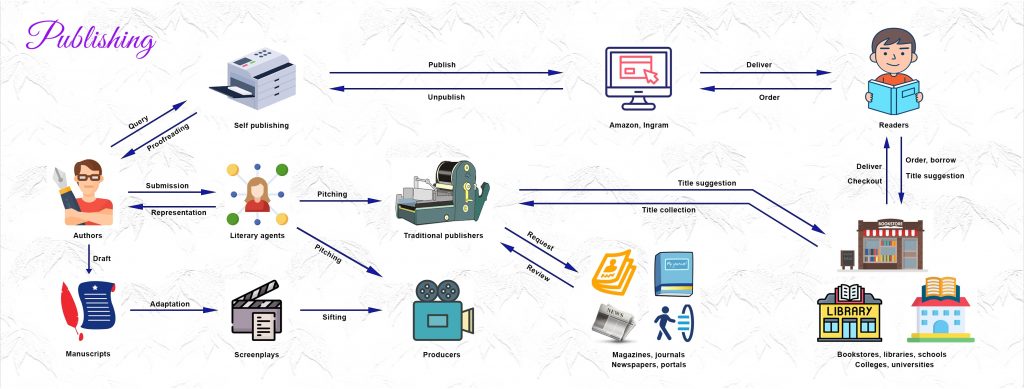
The diagram above illustrates my basic and immature understanding of the amazing publishing industry, covering all the major components in the chain. As a Chinese person whose native language is not English, I feel greatly honored and inspired that my book can make its mark in the predominantly Caucasian English-speaking world, and that it has gained recognition from several mainstream publishers. Meanwhile, the whole process has significantly enriched my understanding of this world.
Books are integral to history and culture, serving as the cornerstone of society’s superstructure. While history is easily forgotten, books remain one of the most effective means of solidifying memories. When my son grows up, everything I have experienced in the city of Toronto will inevitably be brought up again. Without the existence of this book, all the details that happened in court, the immoral deeds of unscrupulous lawyers, and the brazenness and lawlessness of CZS would disappear without a trace over time. Faced with various accusations that my son may hold, I would be unable to defend myself. This is the charm of books and the entire publishing industry.
1. Traditional Publishing
I do not regret missing out on traditional publishing, despite having had three opportunities to do so back then. Traditional publishers boast a well-established supply chain and mature marketing mechanisms. More importantly, they enjoy higher industry recognition and credibility. As the end consumers of books, bookstores and libraries are more inclined to trust new releases by traditional publishers for better market performance.
Cooperating with traditional publishers is not as easy and pleasant as one might imagine. Once you sign a publishing contract, your interests as an author will be deeply bound with them. Twenty-five percent is typically the highest royalty rate that publishers offer, and this percentage is not based on the retail price of the book, but calculated after deducting printing costs and various other expenses. The manuscript you provide will undergo some minor grammar and usage adjustments, and the final version will be the basis for all printing and marketing activities in the future, rendering your original manuscript worthless.
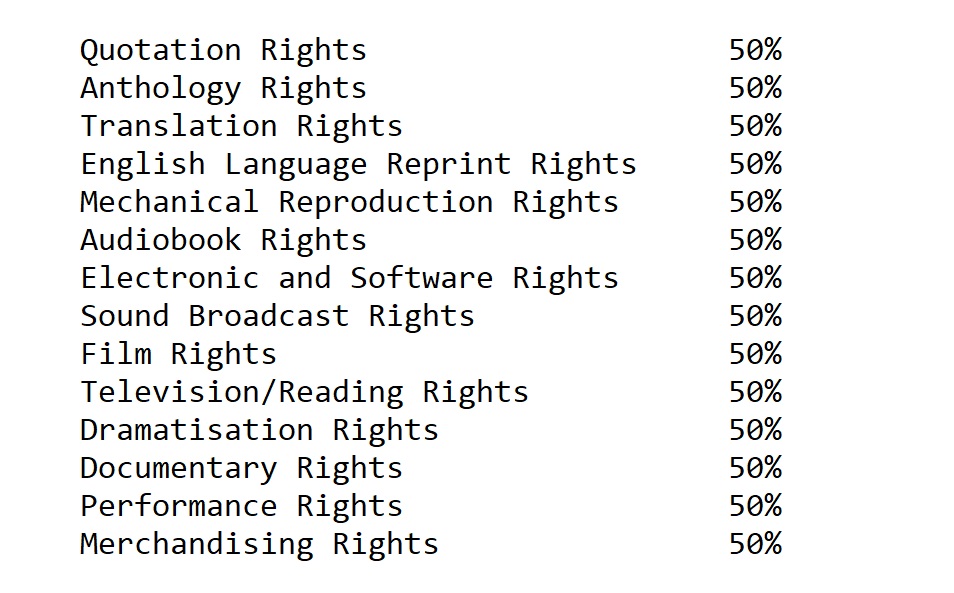
Look at the sheet on the left-hand side, these items are referred to as subsidiary rights. When you signed the contract, you voluntarily surrendered half of the rights that should have been yours. My book has the potential to be adapted into a screenplay, which is why I wobbled when I was presented with these contracts.
Furthermore, as a person with Chinese background, I would inevitably encounter headwinds from the English-dominant cultural world, the marketing efforts would most likely falter after the initial launch. This is an irreversible icy-cold reality.
I had to be aware that I am not the only client of the publisher. When difficulties arise, I could be ruthlessly abandoned. However, when I make efforts to promote the book by myself through other means, the binding power of profits and rights under the scope of this contract will be lifelong.
2. Self Publishing
Self publishing does not require your book to be highly valued; that is, there is no review or screening process on your book if you choose to publish it using self publishing method. When I finished my manuscript, I signed with a self-publisher one week later, while the feedback from traditional publishers came in after one month. So, when it comes to the choice between self and traditional publishing, I didn’t have much room to operate.
The cooperation with the self-publisher was not that satisfactory, all they wanted was money. From day 1 to day 10, their work was pretty good. They sent me correction suggestions for the first half of all chapters. At this speed, 30 days should be more than enough to finish the proofreading process, and publishing and marketing could be started afterwards.
I was so naïve. From day 11 to day 23, there was no communication from them. Emma suggested I inquire about the progress. I stubbornly and foolishly believed that there was no need to push them. I expected their next message to contain all the correction suggestions of the entire book. But I was wrong. When I asked them on day 24, they botched some progress on only a couple of pages. They didn’t do anything for the past two weeks!
Strange? No, not at all. This was part of their cunning strategy: to create my anxiety. In the days that followed, they hardly did any work. Instead, they harassed me with unscheduled phone calls to introduce all sorts of their marvelous service plans.
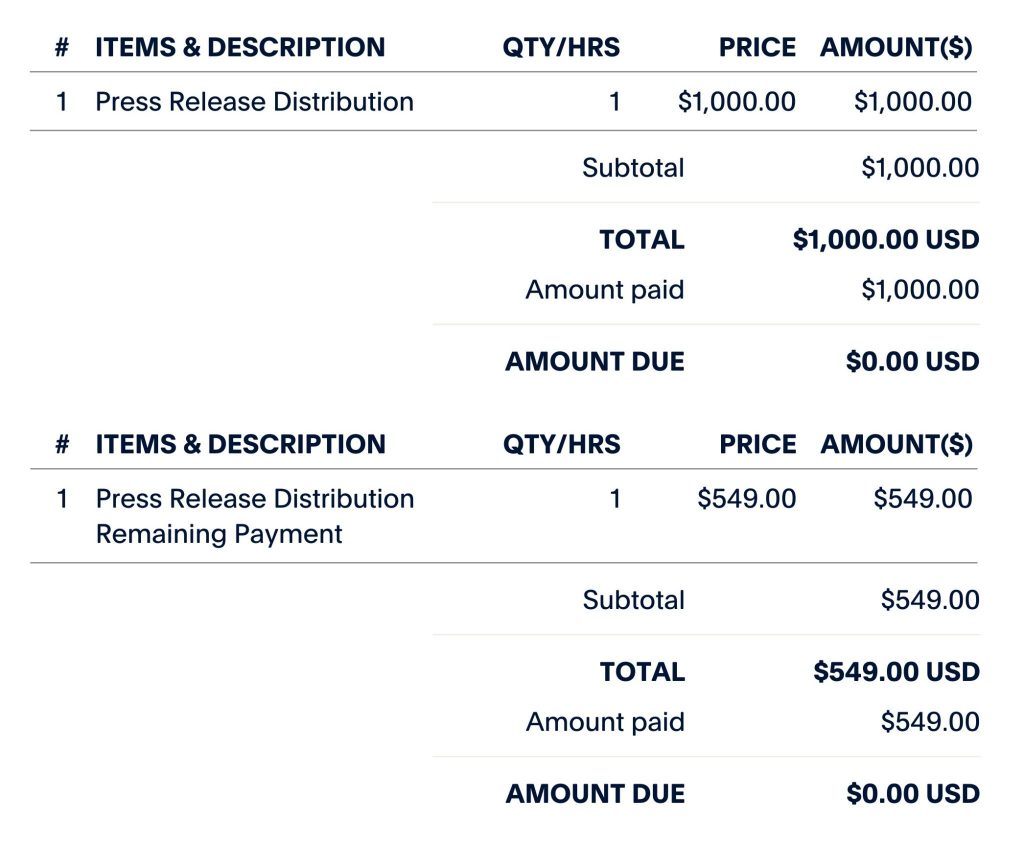
Look at the receipt on the left-hand side. This is one of their wondrous super expensive services. What was this $1549 about? It was about this article called “Press Release Distribution”.
https://www.prlog.org/13000494-my-toronto-life-by-mike-lue-story-of-modern-toronto.html
It might be the most expensive article in this whole world. Their focus was not on how to deliver the best quality of work, but how to swindle and squeeze money out of their customers. They were bullying me as a newbie in the area.
I had to do all the work by myself, including setting up formats, adjusting the positions of all drop caps, and placing the gutter position. At the very end, I had to upload the PDF to the Amazon KDP by myself. Can you believe that? These tasks should have been fulfilled by them as regulated by the contract. The marketing work, which was supposed to start on day 30, eventually began on day 98.
3. Free Publishing
Self publishing is essentially free, if you can deal with these two key aspects professionally on your own: First, you need some knowledge of graphic design to create an impressive book cover. Second, you must be able to handle marketing independently. To be honest, without the support of traditional publishers, this part can be extremely challenging.